
What is Social Media Marketing?
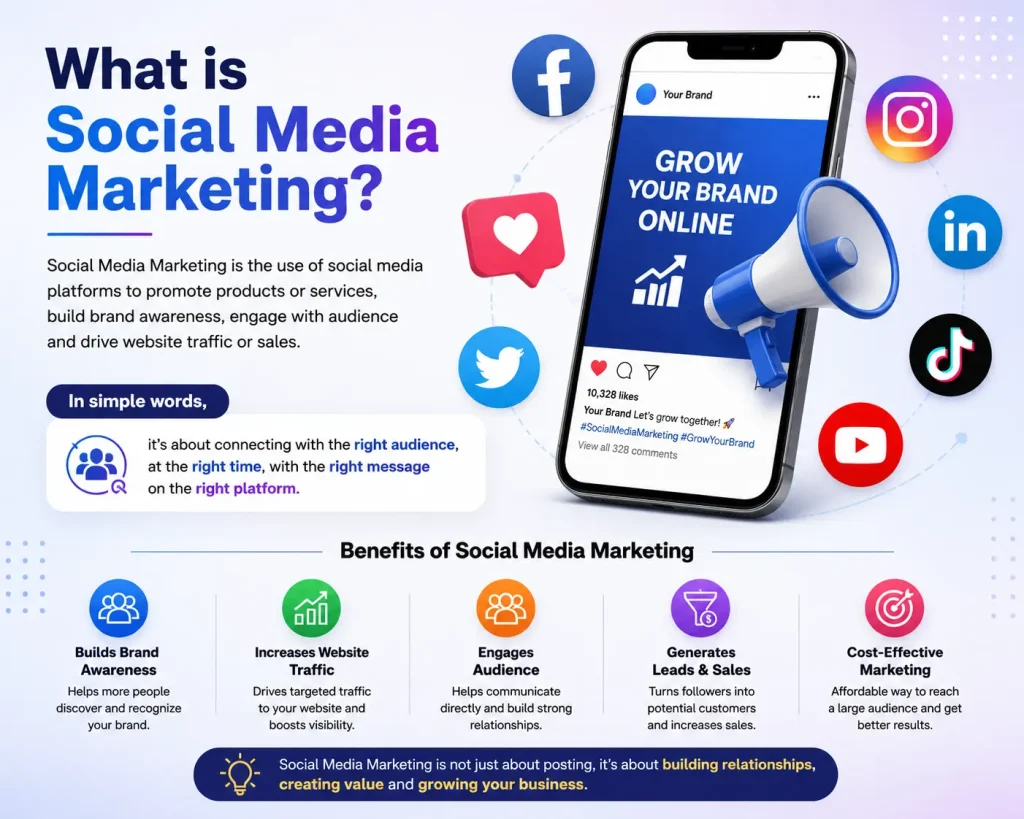
Social Media Marketing (SMM) is a digital marketing strategy that uses social media platforms to promote products, services, and brands. Businesses use platforms like Facebook, Instagram, LinkedIn, and X to connect with their target audience, build brand awareness, and increase sales.
Today, social media has become an essential part of every successful marketing strategy. It allows businesses to communicate directly with customers and create meaningful relationships that drive long-term growth.
Why is Social Media Marketing Important?
Social media platforms have billions of active users worldwide. This gives businesses an opportunity to reach potential customers where they spend a significant amount of their time online.
Some key benefits of social media marketing include:
- Increased brand visibility
- Better customer engagement
- Higher website traffic
- Improved lead generation
- Cost-effective marketing
- Better customer support
By maintaining an active social media presence, businesses can strengthen their online reputation and stay ahead of competitors.
Benefits of Social Media Marketing
Increased Brand Awareness
One of the biggest advantages of social media marketing is improved brand awareness. Consistently posting valuable content helps businesses reach a larger audience and make their brand more recognizable.
Whether you are a startup or an established company, social media platforms can help you expand your reach and attract new customers.
Better Customer Engagement
Social media creates direct communication between businesses and customers. Through comments, messages, polls, and live sessions, businesses can interact with their audience in real time.
This engagement helps build trust and encourages customers to stay connected with the brand.
Improved Lead Generation
Social media marketing is an effective way to generate qualified leads. Businesses can use engaging content, targeted advertisements, and promotional campaigns to attract potential customers.
A strong social media strategy can guide users through the customer journey and increase conversion opportunities.
Cost-Effective Marketing Strategy
Compared to traditional advertising methods, social media marketing offers a more affordable way to promote products and services.
Even small businesses with limited budgets can achieve significant results through well-planned social media campaigns.
Popular Social Media Platforms for Marketing
Facebook Marketing
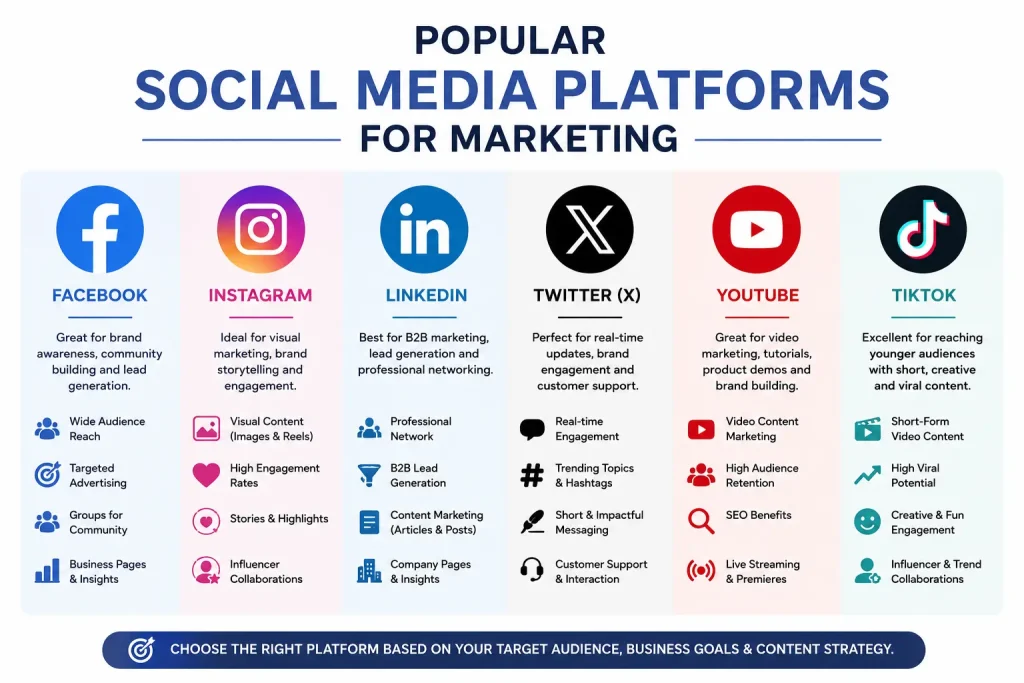
Facebook remains one of the most widely used social media platforms. Businesses can create pages, run advertisements, share content, and engage with customers through comments and messages.
Instagram Marketing
Instagram focuses on visual content such as photos, videos, stories, and reels. It is highly effective for building brand awareness and engaging younger audiences.
LinkedIn Marketing
LinkedIn is ideal for B2B marketing and professional networking. Businesses can share industry insights, connect with decision-makers, and establish authority in their field.
X (Twitter) Marketing
X helps businesses share quick updates, industry news, and engage in real-time conversations with their audience.
Best Social Media Marketing Strategies
Create High-Quality Content
Content is the foundation of every successful social media marketing campaign. Businesses should focus on creating valuable, informative, and engaging content that solves customer problems.
Maintain Consistent Posting
Consistency helps keep your audience engaged and improves brand recognition. Creating a content calendar can help maintain a regular posting schedule.
Use Visual Content
Images, videos, infographics, and reels often receive higher engagement than text-only posts. Visual content can make your marketing efforts more effective and appealing.
Analyze Performance Metrics
Tracking performance is essential for improving results. Businesses should monitor key metrics such as engagement rate, reach, impressions, website traffic, and conversions.
Regular analysis helps identify what works best and allows marketers to optimize future campaigns.
Future of Social Media Marketing
The future of social media marketing is being shaped by artificial intelligence, short-form video content, influencer partnerships, and personalized user experiences.
Businesses that adapt to changing trends and consumer behavior will be better positioned to achieve long-term success. As social media platforms continue to evolve, brands must remain flexible and innovative in their marketing approach.
Conclusion
Social media marketing has become a powerful tool for businesses looking to grow their online presence, engage with customers, and generate quality leads. By choosing the right platforms, creating valuable content, and implementing effective strategies, businesses can achieve sustainable growth and strengthen their brand in today’s competitive digital landscape.
Investing in social media marketing is no longer optional—it’s a necessity for businesses that want to succeed in the digital age.