
Introduction
In today’s digital world, having a website is not enough. Your website also needs to be visible to people who are searching for products, services, or information online. This is where SEO plays an important role. It helps websites appear higher in search engine results, making it easier for potential customers to find them. Whether you own a small business, run a blog, or manage an online store, understanding the basics of search engine optimization can help you attract more visitors and grow your online presence.
What is SEO?
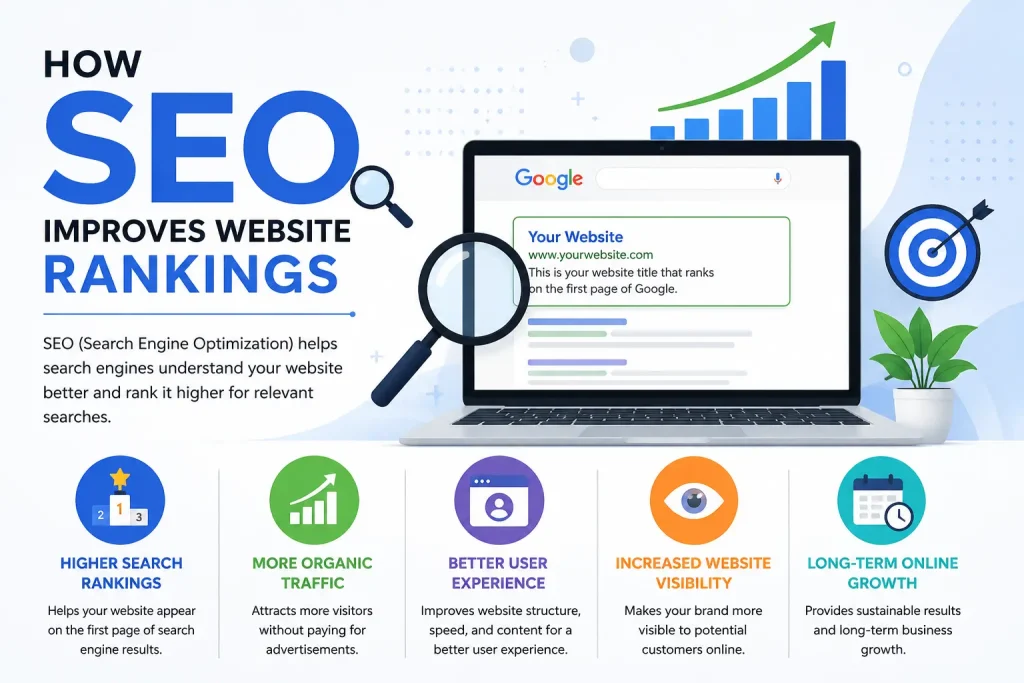
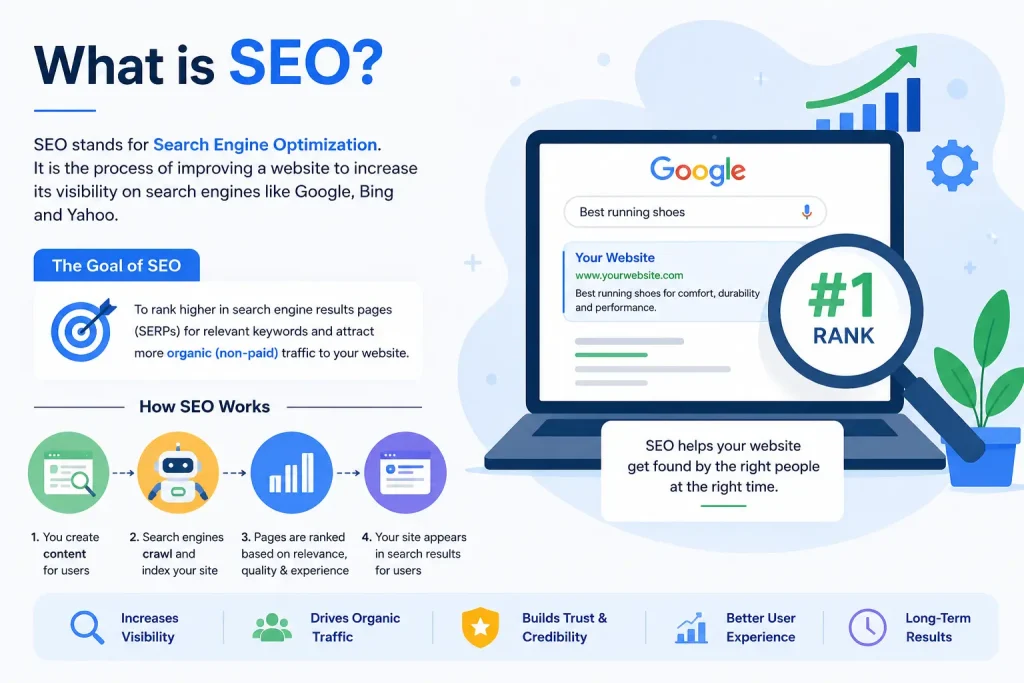
SEO stands for Search Engine Optimization. It is the process of improving a website so that search engines like Google can understand its content and rank it for relevant searches. When a website follows proper optimization practices, it has a better chance of appearing on the first page of search results.
The main goal is to increase organic traffic without relying solely on paid advertisements. A well-optimized website provides useful information, loads quickly, and offers a positive user experience.
Want to learn more about digital marketing? Read our complete Digital Marketing Guide.
Why is SEO Important?
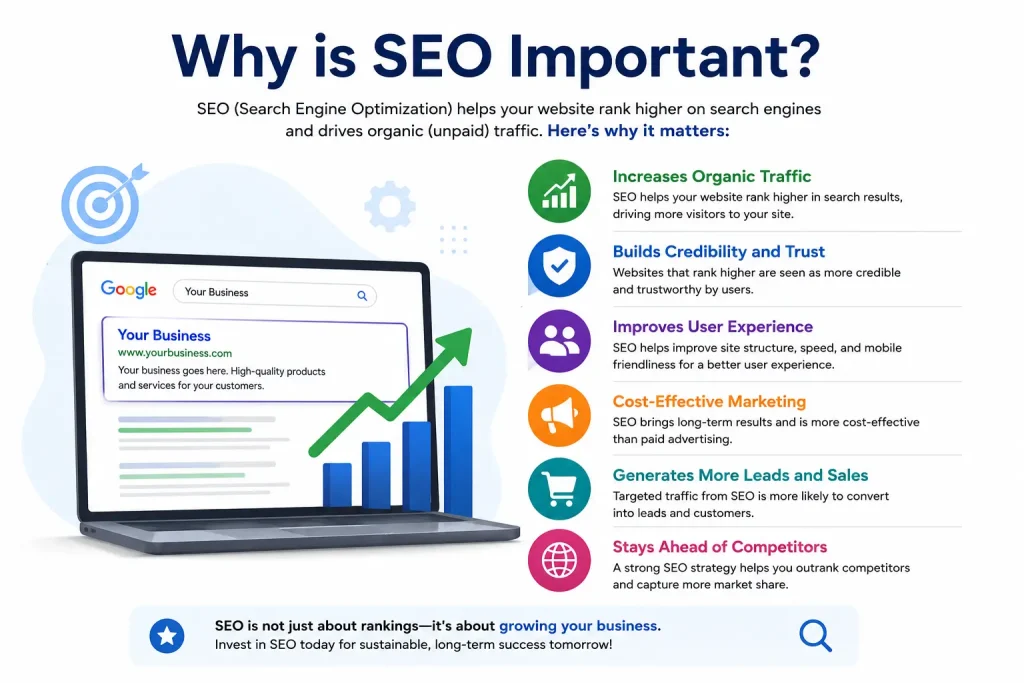
Businesses and website owners invest time in SEO because it helps them reach the right audience. Most users click on the top search results when looking for information online. If your website ranks higher, it can receive more visitors and potential customers.
Another advantage is credibility. Websites that appear in top search positions are often viewed as more trustworthy. In addition, optimization can provide long-term benefits compared to paid marketing campaigns, making it a valuable strategy for sustainable growth.
Key Elements of SEO
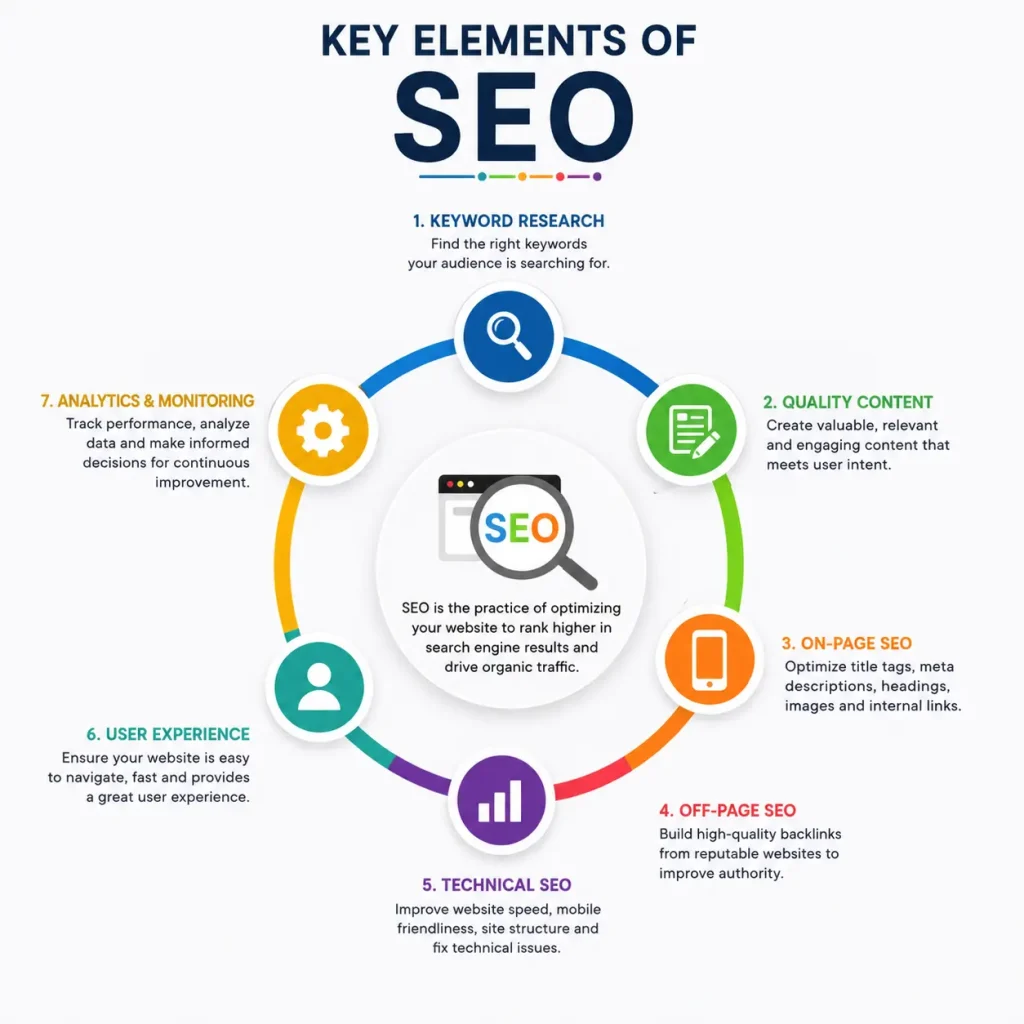
Successful SEO involves several important factors that work together to improve website performance.
On-Page Optimization
On-page optimization focuses on elements within your website. This includes creating high-quality content, using clear headings, writing descriptive meta titles, and optimizing images. Content should answer user questions and provide real value.
Internal linking is also important because it helps visitors navigate your website while allowing search engines to understand the relationship between different pages.
Technical Optimization
Technical aspects ensure that search engines can easily crawl and index your website. A fast-loading website, mobile-friendly design, secure HTTPS connection, and proper site structure all contribute to better performance.
Regular technical audits can help identify issues that may affect visibility and user experience.
Creating Quality Content
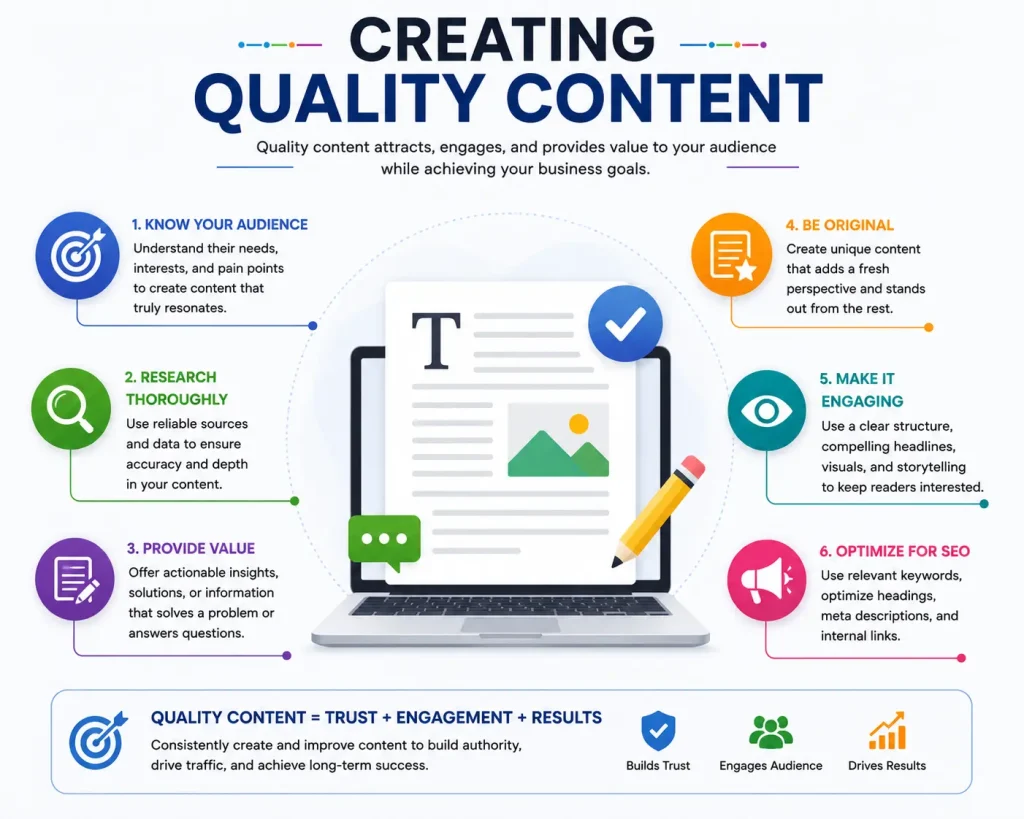
Content remains one of the most important aspects of SEO. Search engines prioritize pages that offer useful, accurate, and engaging information. Instead of focusing only on rankings, businesses should create content that solves problems and answers common questions.
Blog posts, guides, case studies, and informative articles can help attract visitors while building authority within a specific industry. Updating content regularly can also keep information relevant and valuable.
Common SEO Mistakes to Avoid
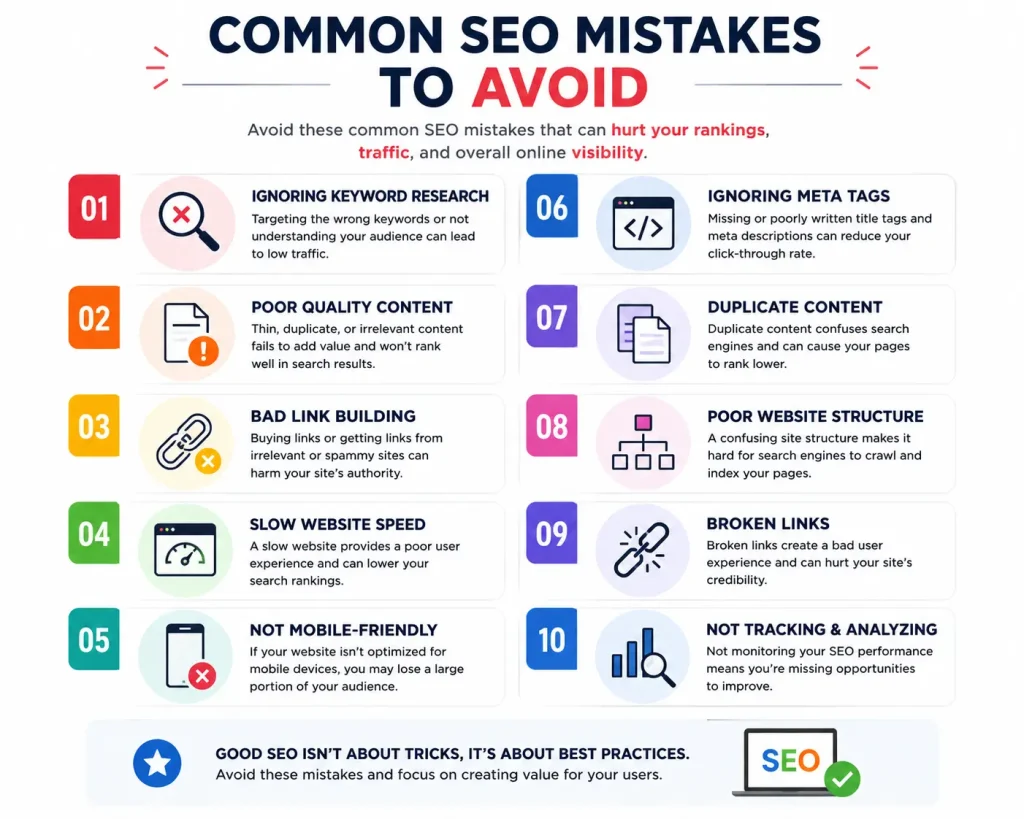
Many website owners make mistakes that can limit their results. One common issue is keyword stuffing, where a term is repeated excessively in an attempt to improve rankings. This can make content difficult to read and may negatively impact performance.
Another mistake is ignoring mobile users. Since a large percentage of searches come from smartphones, websites should be responsive and easy to navigate on all devices. Poor-quality content, broken links, and slow page speed can also reduce effectiveness.
Measuring SEO Success
Tracking performance is essential for understanding what works and where improvements are needed. Website owners can monitor traffic, rankings, user behavior, and conversion rates using analytics tools.
A successful SEO strategy focuses not only on increasing visitors but also on attracting users who are genuinely interested in the products, services, or information being offered.
Future of SEO
The digital landscape continues to evolve, and SEO is constantly changing. Search engines are becoming smarter and placing greater emphasis on user experience, content quality, and search intent. Businesses that focus on creating valuable content and providing a seamless experience are more likely to achieve long-term success.
Voice search, artificial intelligence, and mobile-first indexing are also influencing how websites are optimized for modern users.
Conclusion
SEO is an essential digital marketing strategy that helps websites improve visibility, attract relevant traffic, and build online credibility. By focusing on quality content, technical performance, and user experience, businesses can achieve sustainable growth in search results. Rather than looking for quick fixes, a consistent and well-planned approach can deliver lasting benefits and help websites stay competitive in an increasingly digital world. Learn more about SEO best practices on Google Search Central.